Guest post: The tired woman's guide to movement (what actually helps when you are running on empty)
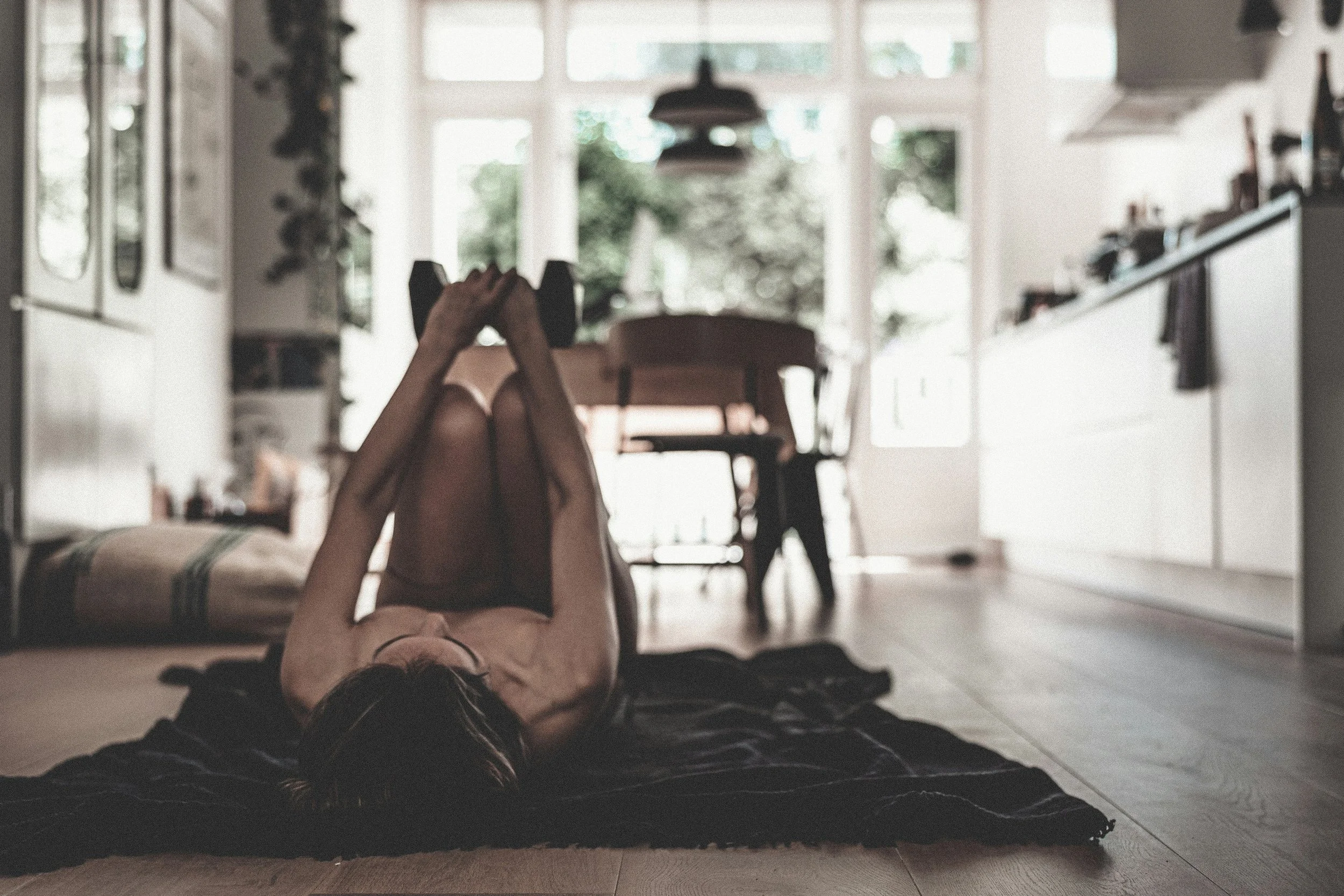
Photo by Peyman Shojaei on Unsplash.
Joshua Cornelius
I build coaching tools for people in midlife, which means I spend most of my week in the gap between what the research says about movement and what actually happens when a depleted body tries to follow it.
Here is that gap in a sentence. Fatigue is one of the most common symptoms of perimenopause, ranked in clinic data just behind hot flashes and reported by more than half of women, and the standard response to it is usually to exercise more. For a lot of women, that advice is not just unhelpful. It is close to the opposite of what a tired body needs.
So I want to make the case for movement, because the evidence for it is genuinely strong, and then be honest about the part the fitness world tends to skip. When you are running on empty, more is rarely the answer. Here is what pays off most, and what quietly costs you.
Start with muscle
If there is one thing worth protecting through this stage of life, it is muscle.
The transition works against it. As estrogen falls, muscle mass and strength decline, and bone declines alongside them, with the steepest loss, more than two percent a year at the spine, concentrated in the couple of years around the final period. That is worth knowing, because it is also the process you can influence most directly.
Muscle does more than make you strong. It is the primary tissue the body uses to manage blood sugar, and it supports your metabolism, your balance, and your capacity to keep doing ordinary things on your own. The longer-term case is just as clear: pooling 16 studies, researchers found muscle-strengthening activity associated with a 10 to 17 percent lower risk of early death.
The encouraging part is the dose. That same analysis put the peak benefit at roughly thirty to sixty minutes a week, not a day, so holding onto muscle does not require punishing training. Two solid strength sessions a week will do more for you than five hard ones you cannot repeat.
It does not need to be a gym, an hour, or anything that hurts. Two half-hour sessions with a load heavy enough to make the final repetitions difficult is the core of it. In practice that means a small handful of compound movements, some version of a squat, a hinge, a push and a pull, done with enough resistance that the last few repetitions are genuinely hard, and nudged up a little over the weeks. You do not need to chase soreness or keep reinventing the routine. You mostly need to keep coming back.
Walk more than you think you need to
Walking gets underrated because it is simple and free. That is also why it works on the days when nothing else feels possible.
It is also quietly effective. A short walk in the half hour after a meal lowers the post-meal blood sugar rise more than the same walk taken before eating, and more than staying seated. The timing seems to be the quiet trick: gentle movement while your body is still dealing with a meal does a disproportionate amount of work for the effort. A daily walk lifts mood, and on a low day it is often the only movement that is realistic. Ten minutes after eating, a walk during a phone call, getting off the bus a stop early – they all count. When energy is low, the point is not intensity. It is keeping things ticking over.
Respect the sleep loop
Regular movement helps you sleep, and good sleep restores the energy to move. Train too hard while already depleted, and you break that loop instead of building it.
Hard sessions on poor sleep and low fuel are unlikely to make you fitter. They can leave you both wired and exhausted. On a low day, the smaller option wins. A walk and a short, recoverable strength session beat a workout that costs you the next two days.
Find what’s worth skipping
I would not call any single method useless, because that is rarely true and usually unfair. But some things are oversold for a tired body: daily high-intensity work, two sessions in a day, the unbroken streak, the plan that frames rest as failure. None of these are villains. They are simply the wrong tool for a low-energy stretch, and treating them as compulsory is how a lot of capable women end up doing nothing at all. In midlife, consistency is what produces results, and the fastest way to lose it is to follow a plan designed for someone with unlimited energy.
Use the simple test
The most useful filter I know comes from outside fitness entirely. If you could not do it for 10 years, do not do it for one day.
It sorts almost everything. The severe program you abandon in three weeks fails it. Two short strength sessions and a daily walk pass it comfortably. Fatigue tends to lift fastest when the plan is small enough to keep, week after ordinary week.
None of this is a quick fix, and I would be cautious of anyone selling one. The sustainable version is the one that works, and it treats a tired body with more respect.
That principle is the reason we built huuman, a coaching tool that adjusts to the energy you actually have, rather than the energy a generic plan assumes. The best movement for a tired woman is not the hardest one. It is the one she is still doing next month.
Joshua Cornelius, co-founder of Freeletics and co-founder of huuman, a new personalized health and longevity coaching app.